
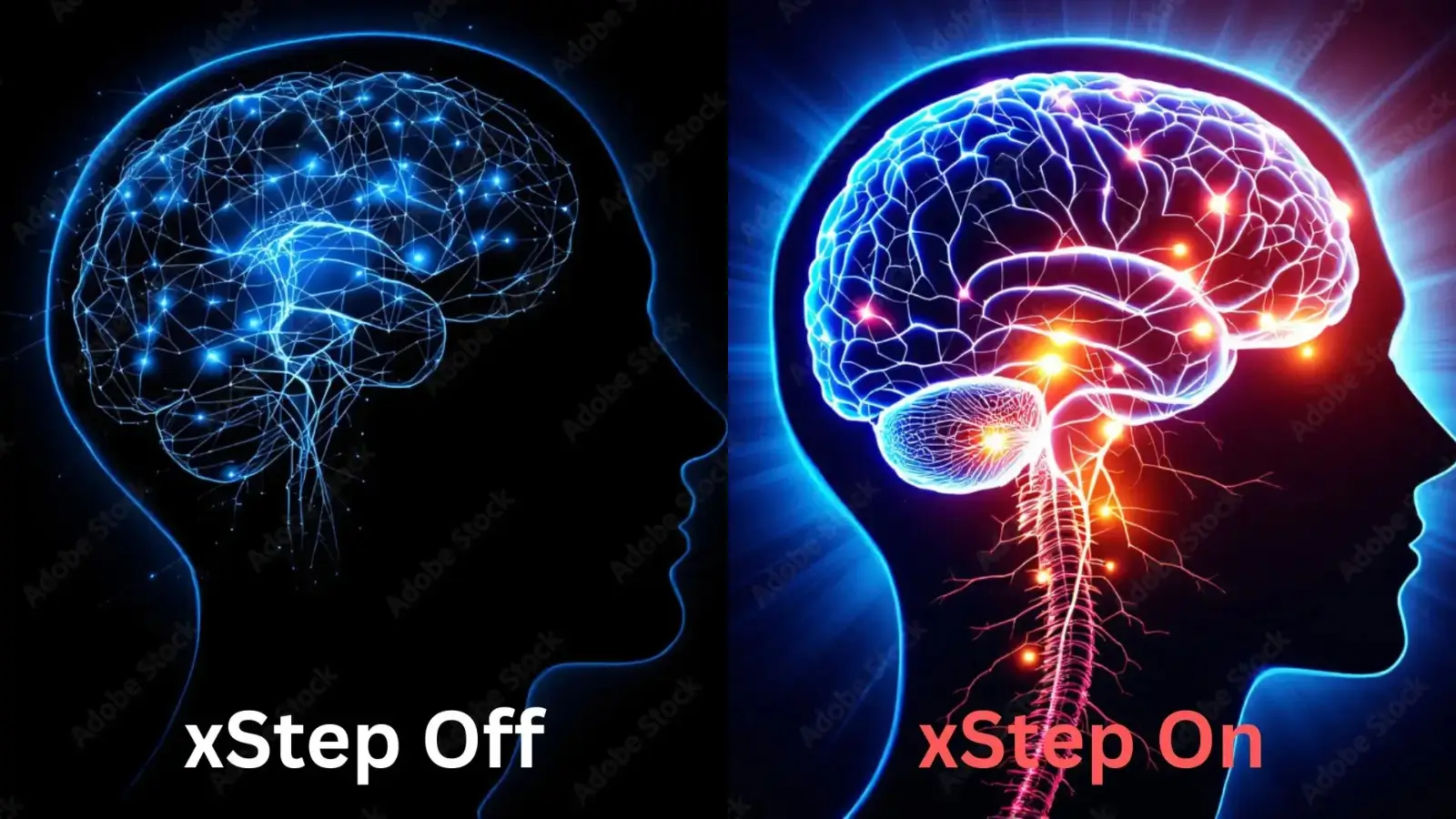
Neurorehabilitation is undergoing a major shift toward activity-based, neurologically driven therapies that target the nervous system rather than focusing solely on diagnosis. Across conditions such as paralysis, spinal cord injury, stroke, and cerebral palsy (CP), evidence increasingly supports the role of repetitive, task-specific movement combined with neuromodulation to promote functional recovery.
xStep Therapy, delivered using the xStep device, is built on this foundation. It leverages transcutaneous spinal cord neuromodulation as its base technology—an approach previously known and studied under names such as SCiP and SCONE. By pairing neuromodulation with structured stepping practice, xStep Therapy supports neurological engagement, movement quality, and functional progress across a wide range of neurological conditions.
What Is xStep Therapy?
xStep Therapy is a structured, step-based neurorehabilitation approach that combines repetitive stepping practice with transcutaneous spinal cord neuromodulation delivered through the xStep device. The therapy is designed to create an optimal neurological environment for movement by emphasizing:
- Task-specific stepping and gait-related movements
- Proper postural alignment and weight bearing
- Symmetrical, coordinated lower-limb patterns
- Progressive intensity tailored to individual ability
By simplifying and supporting the mechanics of stepping, xStep Therapy enables individuals with neurological impairments—including paralysis—to actively participate in movement training, even when independent walking is not yet possible.
The Role of the xStep Device
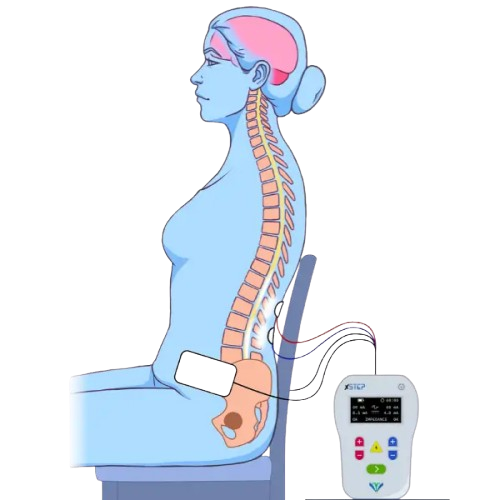
The xStep device delivers transcutaneous spinal cord neuromodulation non-invasively through surface electrodes while supporting repetitive stepping activity. This combination helps modulate spinal and supraspinal networks involved in locomotion, posture, and motor control.
This base technology has been previously studied and referenced under the names SCiP and SCONE, with growing clinical experience demonstrating that neuromodulation—when paired with active movement—can enhance voluntary motor output, coordination, and functional engagement.
xStep builds on this existing body of knowledge by integrating neuromodulation directly into structured, step-focused therapy.
Why Stepping and Neuromodulation Matter in Neurorehabilitation
Research in paralysis rehabilitation, stroke recovery, and pediatric neurodevelopment consistently shows that repetitive, patterned movement combined with appropriate sensory input is critical for neurological recovery. Transcutaneous spinal cord neuromodulation helps:
- Increase excitability of neural networks involved in movement
- Improve communication between the brain and spinal cord
- Enhance the effects of task-specific training
- Support neuromuscular re-education and motor learning
xStep Therapy aligns these principles by pairing high-quality stepping practice with neuromodulation to promote meaningful neurological engagement.
Impact of xStep Therapy Across Neurological Conditions
Paralysis and Spinal Cord Injury
For individuals living with partial or complete paralysis, xStep Therapy provides an opportunity for active, neurologically driven movement practice. Benefits may include:
- Activation of residual neural pathways
- Improved voluntary motor output
- Reduced spasticity and joint stiffness
- Better circulation, endurance, and overall conditioning
These outcomes reflect findings seen in earlier SCiP- and SCONE-based rehabilitation programs, where consistent movement combined with neuromodulation played a central role.
Stroke Rehabilitation
Walking recovery and gait symmetry are key goals following stroke. xStep Therapy supports stroke rehabilitation by:
- Reinforcing symmetrical stepping patterns
- Improving weight shifting and balance control
- Enhancing coordination and timing between limbs
- Supporting endurance and gait efficiency
The structured repetition offered by the xStep device complements conventional stroke therapy and may improve carryover into overground walking.

Cerebral Palsy (CP)
For individuals with cerebral palsy—particularly children and young adults—consistent repetition and proper movement patterns are essential. xStep Therapy may:
- Reinforce efficient stepping mechanics
- Improve lower-limb coordination and strength
- Support postural control and balance
- Encourage active participation in therapy
By combining neuromodulation with guided stepping, xStep Therapy aligns well with long-term neurodevelopmental rehabilitation goals.
Benefits for Clinicians and Rehabilitation Programs
xStep Therapy is designed to integrate seamlessly into modern neurorehabilitation settings, including inpatient, outpatient, and pediatric programs. For clinicians, it offers:
- A repeatable, structured stepping framework
- Adjustable assistance levels across diagnoses
- High-volume, high-quality movement practice
- Reduced physical strain during gait training
The xStep device supports efficient therapy delivery while maintaining consistent movement quality.
xStep Therapy in Modern Neurorehabilitation
As rehabilitation continues to move toward activity-based, evidence-informed care, xStep Therapy represents an evolution of established neuromodulation approaches such as SCiP and SCONE. By integrating transcutaneous spinal cord neuromodulation directly into functional stepping practice, xStep Therapy bridges research, technology, and real-world clinical application.
When combined with strengthening, balance training, and functional task practice, xStep Therapy contributes to a comprehensive, patient-centered rehabilitation strategy.
Learn More About xStep
To learn more about the xStep device and xStep Therapy, visit www.xstep.co.